Gujarat: Four Workers Die in Surat Septic Tank Gas Leak
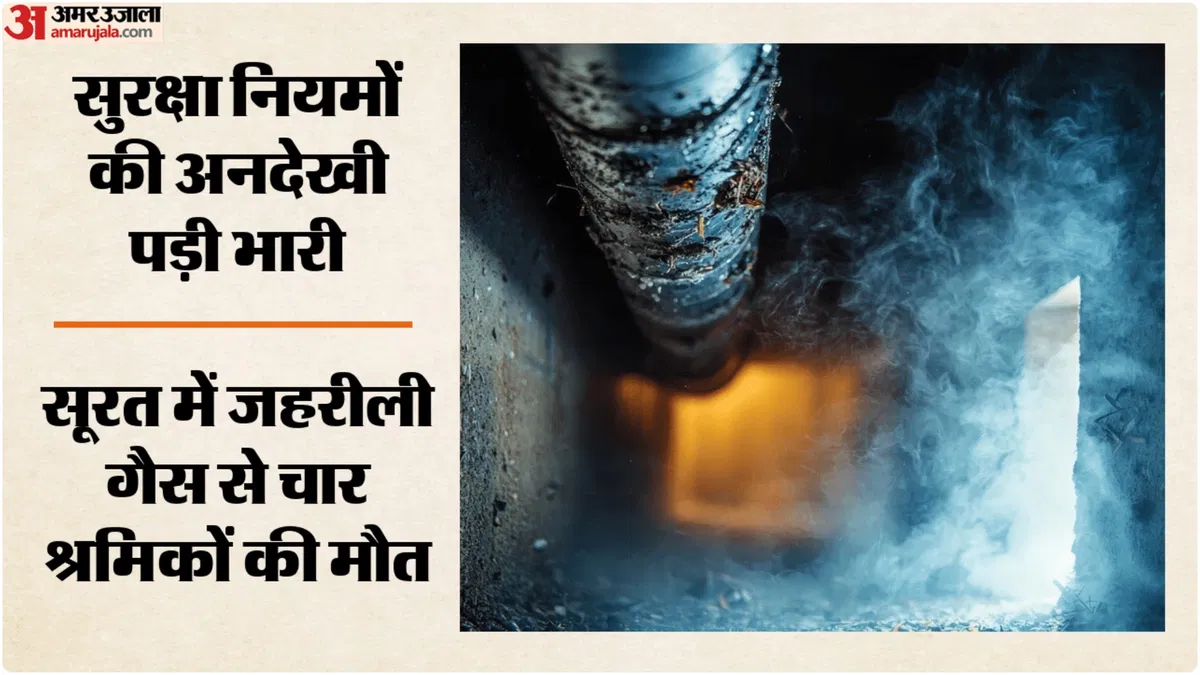
Indianewslive247.com – Surat, Gujarat — A tragic incident occurred on Sunday morning in the Ashwini Kumar locality, where four workers tragically lost their lives after inhaling toxic gases while cleaning a septic tank at a local jewelry manufacturing facility. The event, which has shocked the community, took place at a factory that processes precious metals and gemstones, highlighting a critical safety lapse in industrial operations.
Incident Circumstances and Initial Response
The septic tank, part of the Effluent Treatment Plant (ETP) system, is used to store waste from the cleaning and polishing of jewelry items. Routine maintenance is typically conducted every two months, but this time, the workers entered the tank without proper ventilation or safety gear, unaware of the hazardous conditions inside. According to local sources, the tank was not properly sealed, allowing harmful gases like hydrogen sulfide or methane to accumulate. These gases, often lethal in high concentrations, can quickly lead to suffocation or chemical asphyxiation.
Upon receiving the alarm, the Surat fire department arrived swiftly at the scene. However, by the time they reached the tank, the workers had already lost consciousness due to the toxic fumes. Rescue teams extracted the four individuals, who were rushed to the hospital, but medical professionals confirmed their deaths upon arrival. Divisional Fire Officer Ranjit Singh emphasized the severity of the situation, stating,
“The environment inside the tank was immediately life-threatening. Despite our rapid response, the lack of safety precautions meant the victims could not be saved.”
Investigation and Safety Oversights
Preliminary investigations by the police revealed that the supervisor overseeing the operation had failed to implement standard safety protocols. Alok Kumar, police superintendent of Zone-1, noted,
“The workers did not use any protective equipment, and there was no prior testing of the tank’s air quality. This incident underscores a systemic failure in adhering to industrial safety standards in Gujarat.”
The factory’s ETP system, which is crucial for managing waste from the jewelry production process, was reportedly not maintained adequately. Experts suggest that the buildup of toxic gases could have been prevented with basic measures such as using gas detectors, ensuring proper ventilation, or having an emergency exit. This tragedy has sparked calls for stricter enforcement of safety regulations in Gujarat’s industrial sector, particularly in factories handling chemical processes.
Community Impact and Calls for Action
The incident has sent ripples through Surat’s working-class community, where many rely on factory jobs for livelihoods. Local labor unions have condemned the lack of safety measures, demanding accountability from factory owners and authorities. Meanwhile, health officials are urging workers to undergo regular training on handling hazardous environments, especially in industries where exposure to gases is common.
As the investigation continues, officials are scrutinizing CCTV footage from the factory and the tank’s surroundings to determine the exact sequence of events. The post-mortem reports, expected to be released in the coming days, will confirm the cause of death. In addition, a formal inquiry into the factory’s compliance with safety laws is underway, with potential penalties for negligence. This event is now being viewed as a stark reminder of the importance of industrial safety in Gujarat’s rapidly growing manufacturing landscape.
Broader Implications for Industrial Safety in Gujarat
Experts in occupational health and safety have pointed out that similar incidents have occurred in Gujarat before, often due to inadequate training or insufficient equipment. The recent deaths of the four workers have intensified the debate on whether current safety practices in the region are sufficient to protect laborers from preventable accidents. A report from the Gujarat State Industrial Disaster Management Authority (GSIDMA) indicates that over the past five years, at least 20 such incidents have been recorded, many of which could have been mitigated with better adherence to protocols.
Industry leaders are now under pressure to revise their safety procedures and invest in better infrastructure. The government has also announced plans to inspect all ETP systems in the state, aiming to prevent future tragedies. As Surat remains a hub for jewelry manufacturing, the incident has raised concerns about the safety standards in the sector and the need for regular audits and worker education programs. The families of the victims, who are still reeling from the loss, are calling for stricter penalties and improved safety measures to honor the lives lost.